Tips & Tricks for Warping Your Loom

Plus, Traditions: Marli Ehrman ‌ ‌ ‌ ‌ ‌ ‌ ‌ ‌ ‌ ‌ ‌ ‌ ‌ ‌ ‌ ‌ ‌ ‌ ‌ ‌ ‌ ‌ ‌ ‌ ‌ ‌ ‌ ‌ ‌ ‌ ‌ ‌ ‌ ‌ ‌ ‌ ‌ ‌ ‌ ‌ ‌ ‌ ‌ ‌ ‌ ‌ ‌ ‌ ‌ ‌ ‌ ‌ ‌ ‌ ‌ ‌ ‌ ‌ ‌ ‌ ‌ ‌ ‌ ‌ ‌ ‌ ‌ ‌ ‌ ‌ ‌ ‌ ‌ ‌ ‌ ‌ ‌ ‌ ‌ ‌ ‌ ‌ ‌ ‌ ‌ ‌ ‌ ‌ ‌ ‌ ‌ ‌ ‌ ‌ ‌ ‌ ‌ ‌ ‌ ‌ ‌ ‌ ‌ ‌

You do not currently have a subscription to Handwoven under this email.
Please consider subscribing today

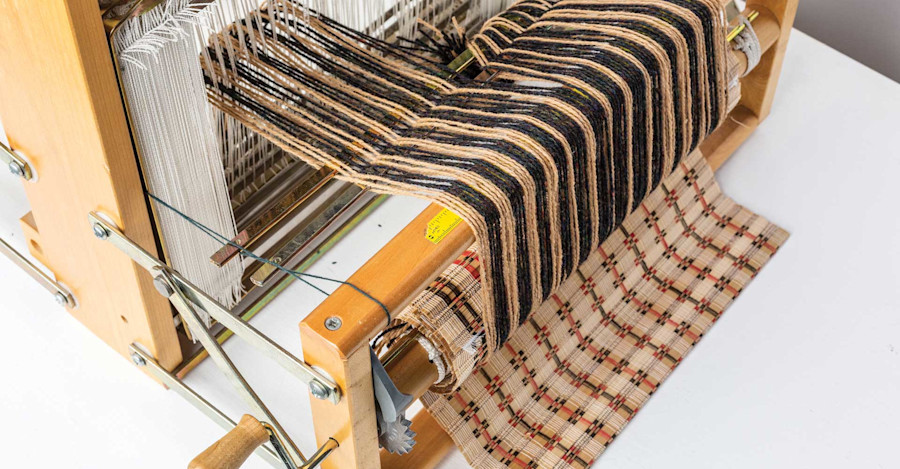
Tips & Tricks for Warping Your Loom
By: Deb Essen

When I first learned to weave, warping my loom made me tense—really tense. But you have to warp to be able to weave, so I put on long warps to avoid warping as often, and then got bored weaving off those long warps. When I decided to complete the Handweavers Guild of America's Certificate of Excellence and faced weaving 40 different samples, I resolved to confront my warping aversion. I began by establishing a routine to make warping easy and fast. I practiced, improved, tweaked, and learned. Now I love to warp my loom!

I've discovered that little changes can have a big impact on my enjoyment of each aspect of weaving. Here are some tips I've found that will make your warping faster, easier, and more enjoyable. Continue reading.

Traditions: Marli Ehrman
By: Joan Cotter + Barry Cotter

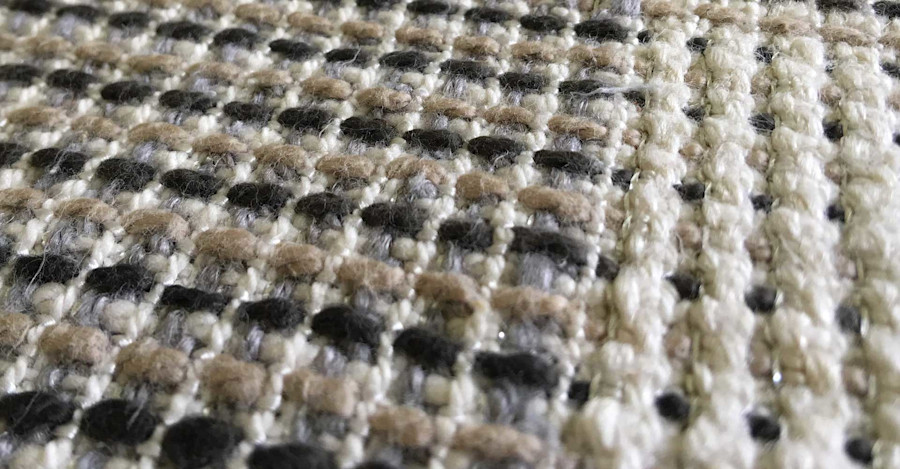
Take a look at the placemat fabric shown above. What is it that you notice? Perhaps the subtle, shiny wefts of Lurex? What about its asymmetrical block design? Does the word "architectural" come to mind? Such discussions would have pleased Marli Ehrman, the designer and original weaver of this mass-produced placemat. Before you can understand the story of Marli Ehrman, though, you need to understand the Bauhaus and its history in Germany and America.

Modernist architect Walter Gropius founded the Bauhaus industrial design school in 1919. The Bauhaus (which loosely translates as construction shop) was born in the aftermath of World War I. Germany was in upheaval, and Gropius and others saw an opportunity for general renewal through art in a time of cultural crisis. Continue reading.

Add to Your Weaving Lexicon with Loom Theory: Eight-Shaft Shawl Collection 2019
By: Susan E. Horton

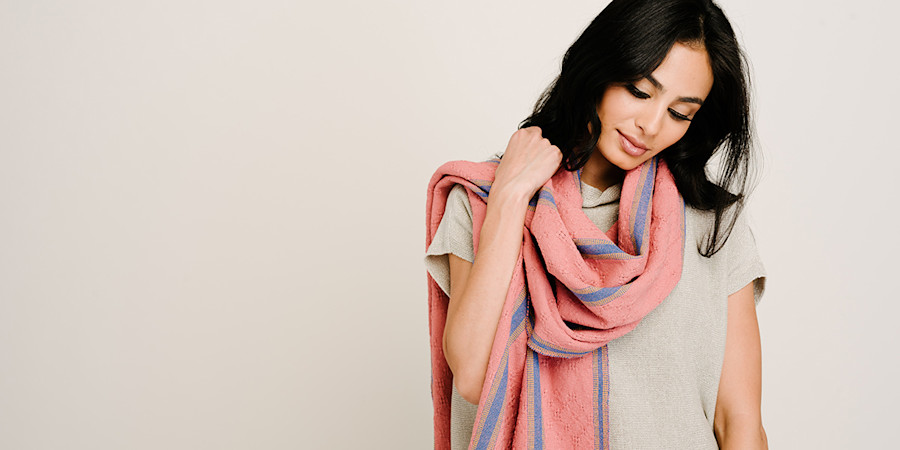
As a weaver, I feel like I am always on the prowl for new patterns, drafts, and color combinations to add to my weaving lexicon. My weaving sensors are on, no matter where I am. I'll stare at the back of a man's suit coat in an elevator trying to figure out whether it is a 4-shaft or 8-shaft twill, spend hours on Pinterest and other websites looking for inspiration, browse weaving and art books for ideas, and take pictures of patterns and colors I see in ordinary life, just because. I will admit to taking photographs of the front of public bathroom doors for more than a year while I was planning a project based on the female symbol you see on them.

If you see yourself in the paragraph above, excluding perhaps the part about photographing bathroom doors, I think you will be interested in the new Loom Theory: Eight-Shaft Shawl Collection 2019. Just as we have done for the other Loom Theory collections, we asked designers whose work we love to weave beautiful shawls using special yarns. And they delivered. Continue reading or browse the lookbook.

Long Thread Media serves content for the handspinning, handweaving, and traditional needlework communities online, in person, and in print. The company was founded by Linda Ligon, Anne Merrow, and John Bolton to publish HandwovenPieceWork, and Spin Off, as well as offer information, education, and community to crafters in those fields. 

From the bottom of our hearts, thanks for being part of this new venture with us. 

To make sure you keep getting these emails, please add support@handwovenmagazine.com to your address book or whitelist us. Not interested in handweaving? Unsubscribe.

​Help us get you the right content! Which looms do you like to work on:
Rigid Heddle  |  4 Shaft  |  8 Shaft
  |  Tapestry  |  Inkle

1300 Riverside Ave, Ste 206, Fort Collins, CO, 80524

Comments

Popular posts from this blog

Put the Wow in Your Woven Rugs & Accessories

Weave a rug that adds color and comfort to your space, and learn to harness asymmetry in design.  ‌ ‌ ‌ ‌ ‌ ‌ ‌ ‌ ‌ ‌ ‌ ‌ ‌ ‌ ‌ ‌ ‌ ‌ ‌ ‌ ‌ ‌ ‌ ‌ ‌ ‌ ‌ ‌ ‌ ‌ ‌ ‌ ‌ ‌ ‌ ‌ ‌ ‌ ‌ ‌ ‌ ‌ ‌ ‌ ‌ ‌ ‌ ‌ ‌ ‌ ‌ ‌ ‌ ‌ ‌ ‌ ‌ ‌ ‌ ‌ ‌ ‌ ‌ ‌ ‌ ‌ ‌ ‌ ‌ ‌ ‌ ‌ ‌ ‌ ‌ ‌ ‌ ‌ ‌ ‌ ‌ ‌ ‌ ‌ ‌ ‌ ‌ ‌ ‌ ‌ ‌ ‌ ‌ ‌ ‌ ‌ ‌ ‌ ‌ ‌ ‌ ‌ ‌ ‌ You do not currently have a subscription to Handwoven under this email. Please consider  subscribing today . Handwoven Summer 2024: Put the Wow in Your Woven Rugs & Accessories Weave a rug that adds color and comfort to your space, and learn to harness asymmetry in design.  In this dual-themed issue, you'll find something to weave for every season and every room in your home. We've focused on projects that use color, patterning, and even asymmetry to excite and inspire you.   If you want to add warmth and style to your bare floors, our six rug projects will get your weaving creativity flowing. Whether you love bold geometric shapes and bright colors, have rags, stash or...

A Shepherd’s Delight: Knit the Woolgrowers Hat & Cowl

Plus, What's Gauge Got to Do with it?  ‌ ‌ ‌ ‌ ‌ ‌ ‌ ‌ ‌ ‌ ‌ ‌ ‌ ‌ ‌ ‌ ‌ ‌ ‌ ‌ ‌ ‌ ‌ ‌ ‌ ‌ ‌ ‌ ‌ ‌ ‌ ‌ ‌ ‌ ‌ ‌ ‌ ‌ ‌ ‌ ‌ ‌ ‌ ‌ ‌ ‌ ‌ ‌ ‌ ‌ ‌ ‌ ‌ ‌ ‌ ‌ ‌ ‌ ‌ ‌ ‌ ‌ ‌ ‌ ‌ ‌ ‌ ‌ ‌ ‌ ‌ ‌ ‌ ‌ ‌ ‌ ‌ ‌ ‌ ‌ ‌ ‌ ‌ ‌ ‌ ‌ ‌ ‌ ‌ ‌ ‌ ‌ ‌ ‌ ‌ ‌ ‌ ‌ ‌ ‌ ‌ ‌ ‌ ‌ SUBSCRIBER EXCLUSIVE A Shepherd's Delight: Knit the Woolgrowers Hat & Cowl Make the most of a special skein or two of farm yarn with this thoughtful design. By: Sarah Pope The Woolgrowers Hat and Cowl are designed as sampler projects for unique skeins of small-batch yarn you may find at fiber festivals or farmers' markets. Use any DK or light-worsted-weight wool. The stitch pattern, adapted from an historical Danish motif, uses purl and twisted stitches to create a lively geometric surface design. Continue Reading What's Gauge Got to Do with it? A different angle on a knitter's least favorite task. By: Katrina King Ask any group of knitters what their least favorite task in the craft is, and the subjects of swatching...

The Natural Beauty of Shetland Yarns

Plus, How to Make a Dorset Button Video + Bonus Pattern  ‌ ‌ ‌ ‌ ‌ ‌ ‌ ‌ ‌ ‌ ‌ ‌ ‌ ‌ ‌ ‌ ‌ ‌ ‌ ‌ ‌ ‌ ‌ ‌ ‌ ‌ ‌ ‌ ‌ ‌ ‌ ‌ ‌ ‌ ‌ ‌ ‌ ‌ ‌ ‌ ‌ ‌ ‌ ‌ ‌ ‌ ‌ ‌ ‌ ‌ ‌ ‌ ‌ ‌ ‌ ‌ ‌ ‌ ‌ ‌ ‌ ‌ ‌ ‌ ‌ ‌ ‌ ‌ ‌ ‌ ‌ ‌ ‌ ‌ ‌ ‌ ‌ ‌ ‌ ‌ ‌ ‌ ‌ ‌ ‌ ‌ ‌ ‌ ‌ ‌ ‌ ‌ ‌ ‌ ‌ ‌ ‌ ‌ ‌ ‌ ‌ ‌ ‌ ‌ The Natural Beauty of Shetland Yarns The colors of Shetland's sheep are a great source of knitterly inspiration. Hear how Gudrun Johnston uses naturals in color-filled palettes. Read online. By: Kate Larson Kate's Fair Isle jumper knitted in five natural sheep shades. Photo by Kate Larson The native sheep of the Shetland Isles are often described as a "primitive" breed, meaning that they retain many of the characteristics of their hardy ancestors. The first thing that often turns our knitter's heads, of course, is their beautiful fleece colors.   Many Shetland sheep colors and color patterns are still identified by old names, tracing their roots to Old Norse. Some names, such as  shaela  (gray) and  m...